Tuesday, September 30, 2014

R.R. Ch. 13

  1. My personal reaction first begins with pg 570. I love the opening cartoon for this chapter. The scit was funny but very true. This cartoon brought my attention to the chapter and made me want to read a little deeper into the chapter. The entire chapter is 81 pages, this chapter was extremely overwhelming. I could not really read this whole chapter. I did like page 585. The enjoy examples, very easy to read and understand.
  2. I liked how the book explained the differences between arugementation and persuasion. This made my essay more proper. This chapter professionally could have been written better. It is impossible to keep any readers attention for 81 pages. My group couldnt begin to read every sentence or scan the chapter. I enjoyed the story on 595, "The Case for the Paying Organ Donors." I was interested enough in the title to read the entire story and understand how a layout should be for the arugumentive essay.

http://www.quickmeme.com/Argumentative-Cave-Bear
Your argument is invalid Therefore I win  Argumentative Cave Bear
 

Thursday, September 25, 2014

Steel, Wood, Alloy, and Polymer

Even before the formation of the United States as we know it today, Americans and the other peoples that lived throughout the continent depended on a variety of tools to survive.  One of those tools helped shape the very nature of our country that we experience and live in today. These early tools were always handcrafted one at a time out the finest oak, maple, and walnut wrapped around a finely tuned piece of hammer-forged steel. Each one carefully fitted, tested and then engraved with some of the most exquisite and intricate designs.  With advances in modern machining and technology, these pivotal tools have transformed into engineered mechanical marvels.  They are constructed with advanced polymers, aluminum alloys, blended steels and involving numerous small parts, each moving and interacting with each other to perform the task at hand.  Utilizing these tools causes emotional, physical, and psychological reactions in its user regardless of whether it is a young child’s first time or a seasoned operator.
Touching and utilizing a potentially harmful tool for the first time floods the user with many sensations that span all of the human senses.  When someone first lays eyes on the combination of steel, wood, or polymer it spurs their mind to fantasize and make assumptions of what attributes it may contain. As soon as they touch and pick it up, the metal feels cold, heavy and slightly awkward because of its length. Upon close examination of this steel tool, it has several strong odors of various oils and grease followed by a sweet but acrid smell.  Once the user begins to operate it, harsh waves of sound and air pressure build up and are released in every direction. Other people in the area immediately hear and experience similar effects. For the operator each harsh sound and acrid smell is preceded by a sharp feeling of recoil throughout his or her body. Each of these tools is designed to operate in a variety of conditions continuously with predictable results; it is this reliability that has caused millions of people to attach strong emotional feelings to these important objects.
For the uninitiated or uneducated, these steel tools elicit very strong and usually adverse emotions.  These emotions range from fear of the unknown, a natural sense of danger to even hatred and terror.  On the other end of the spectrum they range from excitement, respect, a rush of adrenaline, and awe.  These two dichotomies of reactions lead to many misconceptions that illustrate the other in a negative light.  Only through the passing of knowledge, experience, and a sense of personal responsibility will this emotional gap begin to close. For those individuals who are open-minded and receptive to teaching, begin to shift their emotional associations to joy and excitement even though coupled with an appropriate amount of respect.  Emotional and physical stressors are usually strongly associated with an individual’s psychological thought-process and well-being.
Stressors, both emotional and physical, impact how we interact with the environment.  For some the acrid smells and oils, coupled with the sharp sounds elicit a favorable biological response of endorphins and adrenaline which they find calming and euphoric.  However, these same biological responses cause some to experience anxiety, nervousness and adverse physical reactions.  These different experiences relate directly to the varied psychological reactions that each operator associates with these actions. 

     Utilizing these tools causes emotional, physical, and psychological reactions in its user regardless of whether it is a young child or a seasoned operator.  The combination of these emotional, physical, and psychological reactions provides an avenue for someone to have numerous types of experiences not limited by their own previous exposure.  Tools made out of steel, wood, alloys, and polymers have been critical in forming and shaping the nation that we live in today.  It is by these tools that will remain a strong and united people.

Tuesday, September 23, 2014

AKA NOT OK

AKA121 is a blog of fellow classmates of mine, whom I do not know.  I think their theme was suppose to go for soothing and simple but unfortunately comes too close to drab and unimaginative.  The background is pure white with light gray writing which made me turn down the brightness on my screen so I could read the writing.  There are no taglines or witty sayings to entice the viewer to read any specific post.  This in turn already lets the viewer down when he does choose a post to view.   I will say I like the variety of pictures they post with each posting.  The man with the windmill beard made me laugh.
There is no evidence of passion in any of the writings.  I know it is hard to get passionate about and excerpt from a boring text book, but common, college students perfecting faking everything through high school.  Some of the most amazing papers I have seen praised by teachers and professors was written by students who were burning the midnight oil at 2 a.m., 8 hours before the paper is due.  If you can do that, you can pull some creativity out of a 3 paragraph blog post.  I tend to like points being made through writing by NOT directly saying what the writer's point is.  I like the reader to do their own thinking.  This does 2 things, it keeps the reader focused on what the topic is and it lets different readers come to different conclusions around the same idea.  If AKA121 would just cause the reader to do a little thinking, I think my approval would rise.
The thing AKA121 does well is they are directly on point and remain relevant to the topic.  The post at least twice a week (the requirement for the class) which shows they are at least good students.  It is easy to navigate the page and I was able to see what each of the authors posted.  My note to you, AKA121, is entice me! Draw me in with flare and creativity.  If not for me, do it for Jimmy.

Cougar Team Review

My first impression of The Cougar Team was how bright the entire web page was. The bright blue on the sides of each blog post catches your attention although can be overwhelming for your eyes when trying to read the posts. The page is well organized and easy to find what information you make be looking for. I do like the pictures that went with the posts. They were bright and went with the posts they talking about.

  • Frequency of Posts- The blog posts are posted quit often in August with twelve posts however in September there are only two posts. The activity has fallen quickly for a blog that is about a month old.
  • Passion- Cougar Team's memebers write quit professsional. The post about "Reading Images" is informative and well thought out. The writers defintly care about what their writing and only want themselves to sound good.
  • Good Writing- Most of the posts have good grammar and examples. Some of the post just need to double space their spaces between sentences. The words sometime jumble together a bit
  • Astheically Pleasing- The layout is bright and friendly but with the bright blue along the sides makes it hard to focus on the paragraghs to read. The eyes are slightly tired from reading just one post and needed to take a break.
  • User Friendly: The layout of the page makes all links easy to find and read. The columns on the right side is well organized with what posts are posted in what months. The titles of the post need to be smaller so the entire tiltle fits. I read plenty of Ch. 5 and Ch. 7 but some many title sstart off with that title/.
  • Relevance- Im not for sure what Cougar Team has to do with writing but I like the name. The name is unique.
The Cougar Team has many good posts that are very realivent to being in a english class. The biggest problem I had was just the insane blue on the sides that still has my eyes hurting. They are very to the point when it comes to their posts. If the post say Ch. 5 then that post is about the conteents of that chapter.

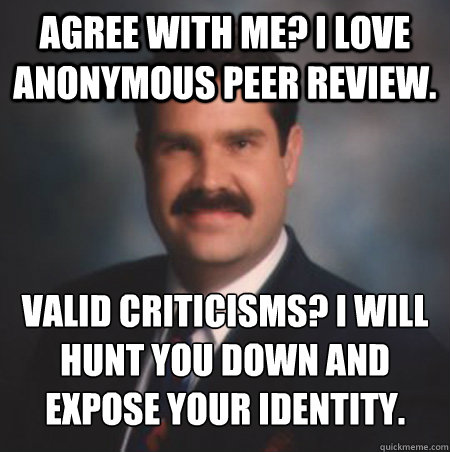
 Agree with me? I love anonymous peer review. Valid criticisms? I will hunt you down and expose your identity. - Agree with me? I love anonymous peer review. Valid criticisms? I will hunt you down and expose your identity.  Scumbag Wattshttp://www.quickmeme.com/meme/3qbjko
 

Corey, Amanda, Addie and Scott Rock!!

After reading the blog CAAS, written by students of the Monday/Wednesday English 121 class, I have formulated a critique based upon the quality criteria list our class came up with.

  • Frequency of Posts- Based on my evaluation, I believe that these students do a fair job of posting rather often. Today is the 23rd of September and they have posted 12 times throughout the month. This approximates to about once every-other, which in my opinion is enough to keep an audience interested. 
  • Voice- Each writer for the blog obviously has a distinct voice in their own posts, but they are still able to formulate interesting points and easy-to-follow stories when writing as a team. 
  • Passion/Expertise- When writing about a topic it is very important to be knowledgeable about your subject and to care for it.  Most of the posts on this blog seem to be rather in depth and well-though out. When it comes to the chapter reviews however, they seem more nonchalant and less important to the authors. My advise to them would be to maintain passion for every piece you create. Even if the subject is dull, force the reader to become interested. 
  • Clarity/Organization- The pieces within this blog are very clear and the website is easily navigable, but there is no real order to it. Blog posts are randomly put up based upon the assignment due that day. This is not a bad thing, it just causes some confusion for the reader when searching for a specific article. 
  • Aesthetically Pleasing- To be blunt this blog is not visually appealing. There are quite a few nice graphics within the posts but the overall theme of CAAS is dull in color, very generic, and would not catch any reader's eye. 
  • Original/Interesting- Solely based on the fact that everyone in English 121 is required to create the same blog posts I would not say that this blog is particularly original. However, the content of the posts does keep a reader's attention and is rather interesting. 
  • Good Writing- Throughout the blog there are various posts from different authors, including group posts. Generally, I would say this group does a great job at formatting their compositions properly, using good grammar and punctuation, and keeping the reader entertained. As with all amateur blog posts, there will be the occasional mistake but that is to be expected. 
  • Relevance-  Everything within the blog is very relevant to the work being completed in class, and gives the reader a good idea of what each student is working on. 
Overall, I would say that CAAS has a very nice blog with the exception of its lack of visual appeal. Their link is http://caas121.blogspot.com/ for those interested in checking it out for themselves. 

By Claire Reyburn 

Word Explosions?!


I sat down and analyzed the blog Word Explosions and have come up with some thoughts about the blog overall.

  • Frequency of Posts - It appears that Word Explosions is a couple weeks old, only beginning on September 3rd, 2014.  Since its inception they have been posting several posts a week by several different authors.  Even though they are posting several times a week, they leave gaps up to 6 days long without any new content appearing on their blog.
  • Voice - The voice element throughout the blog is varied due to the multiple authors posting articles.  Overall, however, the tone is critical but informative and presents its varied subjects appropriately.
  • Passion/Expertise - A lack of content because of its short lifespan doesn't allow the authors true intent and expertise to be shown appropriately.  Going back to frequency of posts, there seems to be long gaps between posts which would appear to indicate a lack of interest in the overall media form. However, if you analyze the individual blog posts a sense of knowledge and passion is apparent.
  • Clarity/Organization - When I first opened the blog each post was laid out according to its attached picture.  This enables the reader to be drawn to a visual queue but does not allow him or her to choose an article to read based on the content of the blog.
  • Visual Queues - The layout and template were bright and welcoming to the reader.  The blue water background coupled with the floating pictures allowed the user time to explore freely without being forced into one blog post or another.  With this layout it was very easy to navigate around the site and access various posts.
  • Content - Overall the blog posts seem to be thorough although short in length.  For the various topics covered I believe there could be more in depth and varied content.  
  • Relevance - Because this blog covers an identical class to the one that I am currently taking, the varied blog posts allow me to examine and then expand on my own posts.  I would like to see more posts by the writers as they seem to be lacking in some areas.
Overall, Word Explosions, was very pleasing to look at even though slightly frustrating to find out what kind of post that I was choosing from the menu.  I would not come back to this blog because of the post layout and in the seeming lack of consistency in the timing of blog posts.

Thursday, September 18, 2014

IN-CLASS THINGIE OF LIFOSUCTION

  1. Cullen Murphy's F. P. first sounded like he was against people lieing about themselves to the public to make themselves look better or worse depending on the topic or situtaion. All of his examples supported that first idea, and made me feel that in his mind, everyone should tell the truth. However, on page 251,"Rather than discourage lifosuction, perhaps we should encourage people to substract even more of themselves from public view that they currently do." I became a little confused.
  2. I counted eight examples.
  3. Quesitons 1-5, 1-5, 1-2
    1. People engage in lifosuction so they can get what they want out of something. In paragraph 6, Harrison wanted to relate to the hard working-man by doing a campaign with a "log-cabin-to White-House" theme. I downplayed how well off he really was and how he got brought up. He didnt lie about it, just left information out. Becasue of this, he looked more understanding and relatable then Martin Van Buren.
    2. He means, we all try to look a certain way in the view of other people, but it is difficult to be criticised depending on how we answer questions. We want to look a cerain way but others will always try to find the hidden secrets in our lives and exploit that secret. Murphy things lifosuction is very serious because he did an entire paper on it. He expresses himself in so many examples and so strongly. He tries to sound professional in all his paragraghs.
    3. I believe Yes, all his examples support this. I still favor the presidentail example. What does it matter that the Harrison grew up wealthy or poor. He might have a different understanding of life, but that should not make a difference on how someone runs the white house. Paragragh one also is not a big deal. The major downplayed his college degree to realte better to certain people. All he got was an ASssociates degree at a Junior college. Who Cares
    4. Down playing what you have is not as bad as lieing about what he say you had. You can down play anything, it makes people understand you better. But if you lie about having more, people may not realte as well. The majority of the population in middle to lower class. You need their votes, saying you had lots of money, alienates them.
    5. That sentence is surprising because he is running for Major and taking that as a joke. Politics regardless of how people make fun of politics, is serious. You need to know what you are doing. If you joke around people wont take you seriously.
    6.  Lifosuction is not smiled upon, but everyone does it and there is not a big deal. I think this is expresse dno tin one sentence but i his examples. When he explained what the definition was of Lifosuction, everything kinda fell into place.
    7. The tone of the essay is straight to the point and smart. He wants people to take him seriously with his complicated words.
    8. The examples in paragragh 3 is the complete opposite of what is int he rest of his story. They all lied or actually added to what actually happened. This paragraph helps his stories because they all have to due with lifosuctino and that people have a slight problem with unstating but a HUGE problem with people overstating hte truth. It is all in the same but one is much worse then the other.
    9. Paragrpah's 3 and 4 start with a topic sentence. The topic sentences are helpful because they halp set you up for that parapgraph. The examples are nice but can get you lost in all the stories. I got lost once or twice in the read so restating lifosuction or getting you reorganized in your thoughts helps remind you of what the topic is.
    10. Murphy organizes his examples by starting off with examples that people can relate to easily.  Running for Major, we all vote; relating to the military, we all try to do that, I think paragraph 4 gets a little more complicated along with paragrpah 5 but then jumps into presidential runings.
    11. Lifosuction is made up but clever because like liposuction, lifosuciton sucks the excess "fat" out of life.
    12. tribune-protector    dint-an impression  cadre- people trained for a specific job   pugilist- boxer   proletariat- working class person

By: Rebecca Pottebaum, Cole Moffitt

Reading an Image

The difference between an advertiser and a promoter is one person is trying to create an image or craft something wordy that entices you as his or her job.  The other is trying to raise awareness that is probably more personal to the artist and not necessarily for his or her job.  Now the first description is someone who is doing a job and trying to create something in order to get the highest profit margin.  It’s true someone can be passionate about their job but there is always still the underlining factor of money.  The second description holds the underlining factor of passion.  A promoter tends to draw more directly on the audience’s emotions or experiences to provoke a response.  Tampering with people’s emotions about a sensitive subject can yield a wide variety of responses and often unpredictable. 
When using an image of a national shame, like the World Trade Center attack, some people can become offended.  This image not only uses the tragedy but it changes it to a symbol of something else.  At first glance this image appears blasphemous and might even offend you.  The artist created this image specifically for that purpose.  He printed the picture in the same resolution as the photos taken on 9/11/01 so that the audience realizes the magnitude of smoking deaths.  . He wanted to convey the message that people who smoked we not just dying, they were being killed. 
The picture looks like it is cut out of a newspaper and was at one time folded up because of the creases going through the picture.  It offers the message that the artist might have been going through old newspapers and found this in his collection of important headlines.  I imagine that there are a lot of people who still have the original article that announced the World Trade Center attack from the New York Times.  When the average American is reminded of the incident, they become flooded with sympathy, empathy, and possibly rage.  Rage against the villains who did it.  That same rage is meant to be directed toward smoking and channeled to empathy to make a difference in the fight against smoking. 
The artist left the red of the flame in the cigarettes just as it appears in the pictures of the Twin Towers burning.  Normally, you cannot see the color of the actual burning tobacco in broad daylight.  This color is meant to match the red in the word “killing” to illustrate nastiness and tragedy of smoking addiction.  The color in the burning tobacco of the cigarette yet again draws the mind of the viewer to the nationally renowned horrifying memory.  This picture, as advertisements and promotions are, is very opinionated and leaning one way.    It is debatable whether smoking actually “kills” people or if it is their own will killing themselves.  This must be kept in mind when viewing a picture such as this.  The artist can manipulate the viewer as they want when the viewer’s emotions are compromised.  

by- Cole Moffitt, Jonathan Gourley, Claire Reyburn, Rebecca Pottebaum


R. R. CH 7

I had a hard time understanding this chapter and what kind of essay Im supppose to write. I think what that chapter is getting at is im suppose to come up with a idea and provide supporting ideas to explain my thoughts. Nothing really stood out to me on this chapter. This was one paragraph that i liked reading because it made me think of something comical. Pg 235,"Combining patterns for a purpose." One of the sentences states,"For example, if you want to entertain your readers by giving humorous examples of your blind dates gone wrong..." That sentence reminded me of a commercial i seen about a blind date and how the guy brought a puppet and made out with it infront of his blind date because it was one of his passions but the doll looked exactly like his date. She got up and left. I think this supports that most people think blind dates are bound to go terribly wrong.

This chapter reminded me of an arugmentive essay. I dont really see the differences.

I love this picture`

Monday, September 15, 2014

Chapter 7 RR

Astonishing as it seems, giving an example of your "general statement" is more difficult than it sounds.  I never though before of what type of example would be most effective based on the audience or reader.  What was most perplexing to me was the different uses of hypothetical examples and true or personal experience examples.  I don't think I have thought about the moderation between the two types before and it is something that will be in the forefront of my mind on my next writing assignment.
Analyzing what type of example, which can be defined as supporting details, can be a challenging task for a student.  If given a paragraph and told to identify and label the type of examples given, I don't know if I could do that correctly.  It is easiest for me to learn how to identify examples or supporting details through examples, themselves.  I like the annotated essays in the back of each chapter and this chapter's essays were especially useful for effective learning.  I would like it however, if they did a brief  review of critical reading somewhere in the chapter.


by Cole Moffitt

Sunday, September 14, 2014

Chapter 7
            Chapter 7 of the Patterns for a Purpose textbook is entitled “Exemplification”. In my personal opinion, I found this chapter to be extremely useful due to the simple fact that I had never heard of “exemplification” in writing before. After reading through this section I learned that exemplification is simply using specific examples to clarify and give credibility to a more general statement. Authors can use their own life experiences for derivation of this statement or they can use something called a hypothetical example. This example is created, not based on first-hand experience, but on plausible observations or knowledge that they may already have.

            From the viewpoint of a student, this division of the textbook is very helpful and rather comprehensive. It goes into great detail on what exemplification truly is, how to use it effectively and how to organize details in an orderly, successful manner. Throughout the chapter there are several examples of comprehensive essays and several questions following these pieces of writing. Answering these follow-up questions is a very helpful study technique and allows the reader to apply the information that they just read in order to gain experience with the topic before diving into their own writing.

By: Claire Reyburn 

Thursday, September 11, 2014

Logical Fallacy- Overgeneralizing

All gingers lack souls therefore all red-heads must be evil.  This statement is a prime example of the logical writing fallacy known as "over-generalization". Over-generalization occurs when an author makes a statement about a certain group and causes the audience to believe that every member of this group falls into the category described. In our example the group falling victim would be gingers, and the over-generalization piece would come by assuming that all gingers are soul-less and evil in nature. This assumption may be accurate in some instances but can not be proven true in every case. For example, the frightening horror movie character, Chucky, is a red-head who lacks a soul and is evil, but Cole Moffitt, a fellow author of Give me a Minute, and fellow ginger is a very kind person who clearly contains a soul. Thus, Cole disproves the previous over-generalization that ALL gingers are cruel and empty.

To avoid over-generalizing in your writing based on the topic at hand, one should follow these tips:
1) Do extensive research on gingers before making such a broad statement to make sure you are not including false information.
2) Before presenting something as a fact, make sure it is not based on personal biases. 
3) Peer edit a document with others of differing view points to ensure information does not stereotype certain groups. 
4) Continually ask yourself if the information you are reporting came from a credible source.

Conquering the Summit

The view of Long’s Peak from Colorado’s Front Range cities can be described in one word: majestic.  The view stretching from Boulder to Fort Collins, Longs Peak stands towering above surrounding peaks.  Fortunately for me, the very best view of the mountain is from my back porch.  I have always looked at that magnificent pile of rock and wondered what it must be like to stand on the summit and look back towards my house.  However, the trek to Long’s Peak summit is no small feat and should not be taken lightly.  Many people who have gone unprepared have been injured and even killed by the brutality of the mountain.  It is a physically exhausting climb that depletes all of your energy reserves.  The challenge of the 15.5 mile trail and 2 mile elevation gain only adds to the distinguishing accomplishment of standing on the summit.  My first step onto the summit was the first step into an elite group of mountain men and women.
The beginning of my journey started at midnight when my phone burst into song blaring “Highway to the Danger Zone” telling me to get up.  It is crucial to leave the trailhead before 2 a.m. to avoid dangerous afternoon thunderstorms so we had to leave my house at 12:30.  I thought I should be so groggy from only two and a half hours of sleep, but I had an incredible adrenaline rush that left my whole body tingling.  We piled in my friend’s car and headed towards the trailhead.  The parking lot of was deserted not only of people, of lights as well.  It seemed queer to me however that the parking lot was overflowing with cars and some were parked down the road.  After we parked, I threw on my light backpack filled with water, food, jacket and rain gear then we headed down the trail. 
The first part of the trail is by far the longest stretch in terms of distance, but it seems to go by fairly quickly.  The trail weaves through the trees for the first two to three miles.  Streams cascading down miniature water falls were meshed with the sounds of the wind rustling the trees.  The sounds were hard to distinguish but the harmony of the noise was soothing and enveloping.  The excitement was still building in me as we reached tree line (about 10000 ft. elevation) and I was hard pressed to move faster. Even though I could feel the first burn in my legs as the trail become rockier and more difficult to traverse, I still picked up my pace.   Unconcealed by shaggy trees, the full moon was so brilliant that I turned off my headlight to walk by the light of the silvery moon.  We stopped for a short break just above tree line and I remember squinting to see the individual craters on the surface of the moon.  It looked as if Bruce Almighty lassoed the moon again and pulled it in.
A sigh of relief rolled over me as we approached the first Y in the trail.  Chasm Lake and the Diamond face trail veered off to the left.  A sign to the right read: “Long’s Peak Summit: 5.2 mi”.  I had to sit down after reading that.  My phone read 3:02 a.m. and we had come about three miles which is making pretty good time.  We were passing people coming up the trail, I didn’t see any lights in front of us which was a good thing.  I slung my pack onto a rock and the early morning breeze made me shiver as it reached the sweat on my back.  At 11000 ft. there is no air to hold the heat from the previous day so the temperature can have a range of thirty to forty degrees in a twelve hour period.  With wind chill the temperature, even in August, can feel like sub forty degrees before the sun comes up.  Fortunately for us, the wind was calm and the temperature was in the mid-50s which is comfortable for me. 
It was time to press on after a ten minute break because wanted to summit before eight that morning.  The trail ahead beheld the trek around Battle Mountain.  It got its name directly from hikers “battling” the wind, rain, snow, and lightning.  It was not very much of a threat to us because there are very rarely storms or wind at three in the morning.  As I came around Battle Mountain and started to climb, I saw the lights from all the Front Range cities from Thornton to Loveland.  The light from the moon was not enough to illuminate the ground around the city which made the lights of the city look like fireflies caught in a still, black sea.  This view gave me a rush of wonder, wonder of what the view must be from the top if even here, half way up the mountain, it was spectacular.  Immediately I no longer felt the burning in my thighs and calves.  I knew that whatever pain I had then or in the miles between the summit and me would make it all that much more worth the climb.
The trail went all the way around Battle Mountain and up a trough on the backside.  On top of the trough was the Boulderfield Campground.  This is the transition point in the trek.  This is where it changes from a hike to a treacherous climb.  The light from the sun was just beginning to paint the sky a plum purple and I could see the Boulderfield.  The Boulderfield is exactly what it sounds like, a giant uphill field of boulders.  Up until this point we had been on a path carved out of rock, dirt, and vegetation but the Boulderfield has no trail, no direct way, and no dirt or vegetation.  Scrabbling up some the precarious rocks, that I can only imagine weigh in excess of a million tons, can be a heart racer.  I am sure there is nothing to worry about.
At the top of the Boulderfield is the famous Keyhole.  The Keyhole follows the naming process of all landmarks on the accent of Long’s Peak and looks like a big keyhole in the side of the mountain.  The Keyhole is the second and final landmark in the climb and beyond it lies the most difficult part.  Near the top of the Keyhole is a stone hut that was built by an Army Ranger Company almost fifty years ago.  The hut is about twelve feet high and has a pane glass window.  I have no idea how they got a single piece of pane glass up six miles but it is a pretty spectacular and yet queer sight to see.  The trail passes right through the Keyhole and on the other side is a near sheer drop off to a small crystal blue lake.  Sitting on the Keyhole is quite an accomplishment as there are many people who cannot even make it that far.  I sit and enjoy the sunrise as well as strike up friendly conversations with my fellow hikers.  After a while, my friends and I, along with this new group of friends made just moments ago, decided we were all going to take off for the summit together. 
We crossed over the Keyhole and entered into the darker, more deadly side of the climb.  The Keyhole sits at 13200 ft. and the summit is at a lofty 14255 ft.  There is only a mile left until the top.  This is the most dangerous part of the whole climb.  For the whole rest of the trek, if I wasn’t walking along near vertical faces, I was scaling them.  The hardest section, in terms of physical effort, is known as the Trough which is just beyond the Keyhole.  The Trough is a slight valley between two false summits (a high point that looks like a summit but is not).  Climbing the Trough is taking three steps, stop, and repeat, it is incredibly exhausting.  My thighs were burning so much that I thought if I raise my leg above my waist, I might tear my muscle clean off.  The top of the Trough is the Narrows, followed by the Home Stretch.  The Narrows is a short section treading carefully on a cut in the rock along a 500 ft. cliff.  The Home Stretch is the final stretch before the summit.  At this point it does not matter if my legs will hold me or not, I was determined to make that summit. 

Cresting the summit of the near insurmountable mountain is the conquering step on this great journey.  It immediately leveled off as if I had stepped out of this world and entered a whole new realm.  I took a screenshot of my phone when I hit the summit, it read 7:42 a.m.  7.5 miles of hiking and 2 miles of elevation gain in just under 7 hours.  I pushed through my exhaustion and took in the beautiful scenery around me.  The summit was about half a mile square of level rocks and the far eastern edge was the top of the treacherous Diamond Face.  The Diamond face is a solid slab of granite towering nearly 1000 ft. above Chasm Lake below.  Rocky Mountains behind me and the great Colorado Plains in front of me was a truly indescribable moment.  The sun was poking through the sparse clouds in the sky and individual rays of sun were visible.  As I stood on the edge of the granite face, I attempted to take in the majesty of this sight.  My legs were growing weaker by the second but that only added to the delight and satisfaction that I am now in an elite group of rugged mountain people who have climbed Longs Peak.  The hardest part was turning around and knowing the trip was only half over.  It was a 2 mile decent and a long 7.5 miles of walking to the car.  It was the decent out of the heavens.  
by Cole Moffitt

Descriptive Essay

Delirious
            The beep is low and slow. One long drawn out note that seemingly disappears into the air the longer it continues. Why doesn’t someone just unplug the damn machine? I think to myself. I am then utterly baffled by the voice inside of head. It echoes and reverberates through my skull as if there is nothing but empty space between my left ear and the lobe of my right.  Confused, I figure it is just the obnoxious beeping getting to me, increasing the volume of my thoughts. 
I quickly exit the room and enter into a bright hallway full of bustling people. Everyone has a purpose and a place to be. It feels as though I’m walking down a crowded sidewalk in New York City. Nobody makes eye contact with the others in their path, and it seems like the only important thing to each individual is keeping a steady pace in order to reach their final destination in a timely manner. This is fine with me I guess. I put my head down like everyone else; hands in my pockets, and stare at my knock off Steve Madden combat boots as I trudge further down the hallway.
I need to find my mom. I know I came here with her but where did she wander off to? Usually that woman, “Karen” as her friends like to call her, is so unbelievably saturated in Beyonce’s “Midnight Heat” body spray that the only technique needed to hunt her down is to start sniffing. So that is exactly what I do. I pick up a sugary whiff as I round a corner toward the end of the hallway. I turn and encounter two, large double doors. Using every ounce of my power, I shove them and burst through to the other side. Although it felt like I had put my all into this process, I glance back and the doors appear to be as tightly sealed as they were when I was on the other side. Oh well. That was the least of my concerns. Back to my German Sheppard-esque strategy of detecting Karen.
The sweet smell is growing stronger. Following my senses reminds me of hot and cold; a game I used to indulge in with the neighborhood kids before reaching high school. Before every kind of game was ruled ‘un-cool’ unless it involved alcohol or members of the opposite sex.  The rush of vanilla is overwhelming! I see a cafeteria in front of me. Could the scent be from some sort of lunch lady’s concoction or was that my mother? It never hurts to check I suppose.
I walk into the large room. It consists of tables and chairs to the left, and to the right there forms a long line of people holding trays while simultaneously waiting to be slopped a lukewarm pile of mystery meat. Seated in the chairs, and forming the line’s composition, are average looking people of every age, race and gender imaginable. There is something odd about all of them though. They look tired. There is deep worry behind their eyes.
I scan the room until finally I spot her.  Mrs. Karen Johnson is sitting to the left in the back corner of the completely linoleum dining hall. The fluorescent lights make the bags under her eyes look as though they are about to burst out of her skull.  The same worried look falls behind her gaze, but other than that she looks completely detached. The emotion center of her brain may as well be switched off. She holds a cup of coffee in her hands, which has obviously gone cold. It lacks steam and as I began to walk closer I can tell it has hardly been sipped.
“Mom!” I yell as I draw closer. My voice sounds like I am underwater, but that can only be blamed on the acoustics in the sprawling room I’m sure. She does not look up from her coffee. I don’t believe she heard me.
“MOM.” I keep yelling. She looks up slowly as though she hears me, but her worried expression is still blank. Her stare cuts through my body like glass. With that look, the harmful realization that she doesn’t see me either starts to sink in. I flail my arms, scream, and make a scene but it’s as though nobody knows I’m there.  I am invisible to the world and I don’t know why.
I attempt to cry but tears don’t come. Normally in an upsetting situation like this my breathing becomes rapid and almost uncontrollable, but now my chest doesn’t even move. What is happening? Where am I? The cafeteria begins to spin and my vision goes blurry. Suddenly the brightest flash of light I have ever seen stabs at my corneas, and everything goes black.
The beep is low and slow. Beep… Beep… Beep… My eyes open and I am surrounded by men and women all wearing white coats. I see the blurry outline of my mother’s silhouette as my eyes adjust to the light. I hear whispers from the crowd of colorless coats.
It’s a miracle.
How in the world?
My mother bursts into tears as she stares to directly into my eyes. “You’re alive! My baby is alive!”

 By Claire Reyburn


Tuesday, September 2, 2014

Everyday Carry

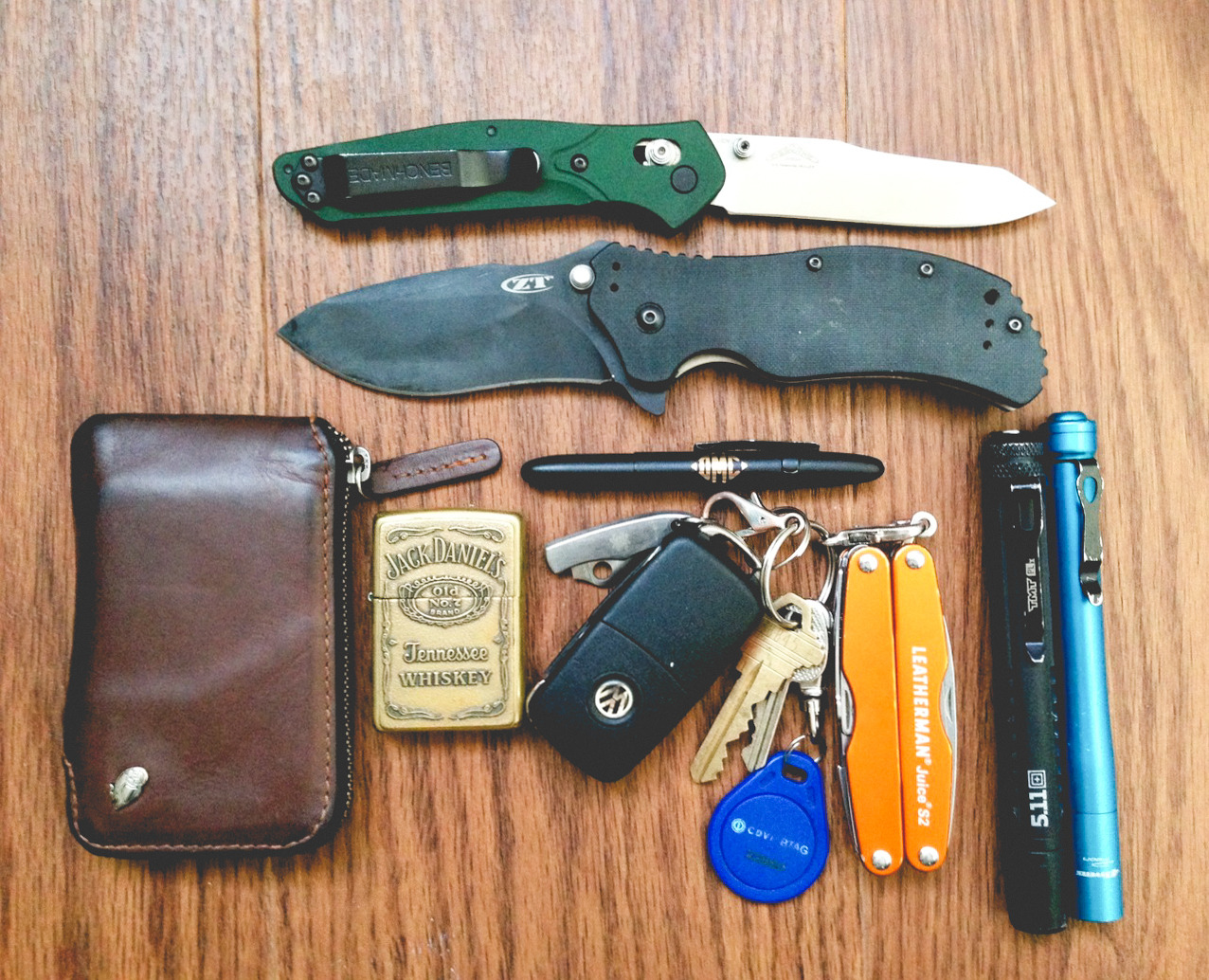
Throughout the entirety of English 121, students have been analyzing and reviewing different blogs. As blog writers ourselves, the authors of "Give Me a Minute" have come together to present our personal opinion on a blog called "Everyday Carry". We have found this blog to be very interesting because it deals with the lives of ordinary people and their standard pocket contents. These posts make people more aware of what they have on hand everyday and also give them insight into what others view as essentials for daily use. The tone and language used in the author of "EC"'s blog is more on the serious, professional side as it deals mostly with product reviews and a more mature audience. This blog gained popularity by being relatable to most individuals gearing their lives toward the professional side of mortality, and those who just appreciate the artistic elements of the photography. PLUS, its really cool.The visuals in this blog are all high quality, organized images of electronics, pocket knives, wedding rings, and many other gadgets. All images are submitted by followers of the website, making them even more personally relative.The simple but comprehensive writing style of the blog consists of reviews done by creator Bernard Capulong, which are break-downs of all the items displayed in the site's images, in full detail.  Small to big, most of someone's important items are toted around in their pockets. For this reason, it is a great idea to check out Capulong's internet creation, everyday-carry.com.


By: Jonathan Gourley, Rebecca Pottebaum, Claire Reyburn and Cole Moffitt 

Reading Response Chapter 5

Reading Response #3
Chapter 5
            I found Chapter 5 of the Patterns for a Purpose English textbook to be quite useful. This specific chapter, entitled “Description”, touches upon that topic exactly. It goes into great detail about how to use proper descriptions in your writing, and even how to decipher details in an image to learn more about its purpose. One tip that I found very useful from this section of the book was when it explained how an author should focus on a dominant impression of something. The dominant impression is one very important detail of how the writer wants something to be viewed throughout a piece, and by focusing on this specific detail, description of that certain thing will be much more manageable. After learning this strategy I believe character development in my writing will improve greatly.
            The use of many example essays in this section was very helpful as well. By elaborating on the active use of description in writing, students are given more of a clear image of exactly what to do when applying detail. These samples could come in very handy when being asked to write your own descriptive essay, or when studying for a test based on detailed writing. The amount of interactive work that this chapter has incorporated is plenty to prepare students for application of the topic of detail in a classroom setting.


By: Claire Reyburn

Contributors